Linxon’s Reisacher on working with ECAs in challenging times
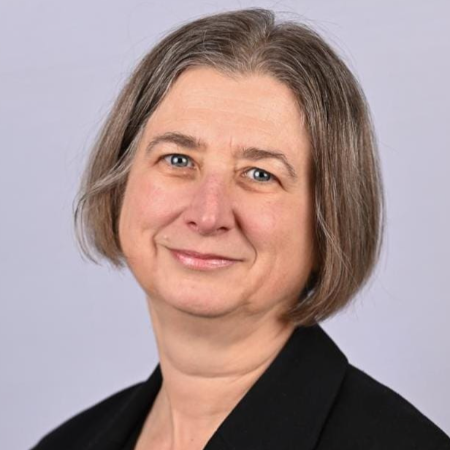
Stefan Reisacher, CEO of EPC contractor Linxon, discusses how to work with ECAs in challenging conditions. Contractors need to improve communications with sub-suppliers - from bidding to investment decisions and beyond.

TXF: Can you tell us about Linxon as an EPC? How did you get here and how are you positioning yourselves in the green energy and infrastructure sector globally?
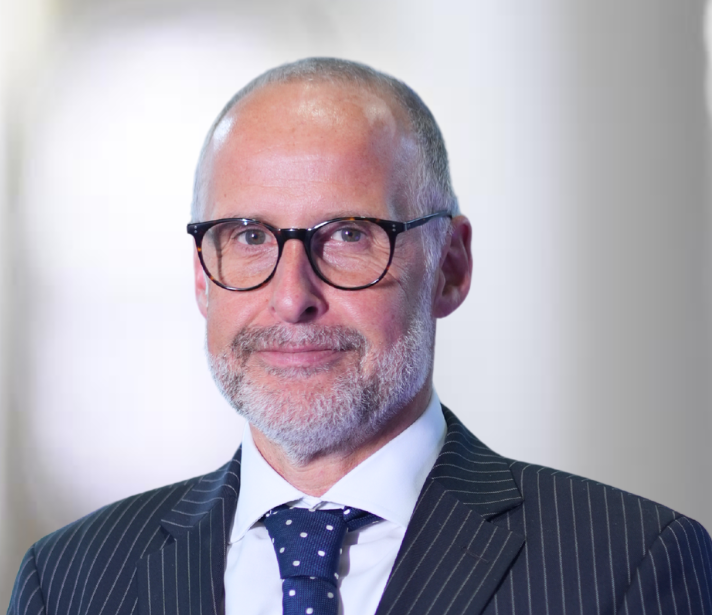 Stefan Reisacher (SR): Linxon was formed as a strategic partnership between Hitachi Energy, a market leader original equipment manufacturer (OEM) and Atkins Réalis, a large engineering, procurement and construction (EPC) contractor. The focus of the business is turnkey electrical AC substation projects, for which we today see great opportunities in the market and good potential for ECAs. We benefit from the strong financial standing and backing of two publicly listed shareholders, while operating with an integrated and streamlined EPC model that allows us to move decisively and respond quickly to customer needs. This balance lets us execute complex projects with confidence, while maintaining flexibility in how we structure and deliver them.
Our core customers are transmission system operators, but our role extends well beyond traditional grid projects. We connect renewable and conventional power generation to the grid, support major infrastructure developments such as the connection of Hinkley Point C to the UK National Grid, and deliver rail electrification, and utility-scale battery energy storage systems. This expanding portfolio positions Linxon at the centre of the energy transition and the modernisation of critical infrastructure. ECAs are an important enabler of these projects, and we work closely with customers and financiers to integrate ECA financing into project structures supporting the global energy transition.
TXF: Where do you operate geographically?
SR: We operate in three hubs the Americas, Europe and Asia Pacific, Middle East and Africa (AMEA). Since we started in 2018, we have grown significantly, revenues have more than doubled, our profitability has grown nicely, and our order backlog has increased fivefold.
TXF: What’s behind that growth?
SR: The two market drivers of investing are [first] grid capacity and grid resilience, as part of the change of the energy system to renewable energy or non-carbon energy sources. The need for grid resilience, such as the partial blackout of Spain, has driven 80 billion of investment announcements.
The second driver is the sharp growth in electricity consumption globally. Transmission system operators around the world are forecasting a doubling of electricity demand by 2050, National Grid in the UK, Svenska kraftnät in Sweden, also the across the US and the Asia Pacific, Middle East and Africa [regions]. That’s data centres, EVs, decarbonisation of heavy industries in certain parts of the world. If you try to produce green steel or green aluminium, all this drives demand.
With those strong drivers, we've built a reputation in our market niche for operational excellence and delivery capabilities. Our differentiation lies not just in access to advanced equipment, but in our proven ability to integrate and deploy cutting‑edge technologies within complex, live transmission environments on turnkey basis. As grids modernise, this level of capability is critical.
A good example is the industry shift away from sulphur hexafluoride (SF6)]. To give a bit of a background, a lot of the switchgear today [for conductors] has insulation gases that are highly climate active. Replacing SF6 is not a simple equipment swap. It requires specialised engineering, system integration expertise, and rigorous execution to ensure reliability and safety. Linxon is among a limited number of EPC providers globally with the know‑how to implement SF6‑free solutions in large‑scale transmission projects. We are currently executing this in the London Power Tunnels 2 project for the UK’s National Grid. As more transmission operators move to adopt environmentally responsible technologies, this combination of technical leadership and delivery experience positions Linxon strongly for continued growth.
TXF: These are challenging times for anyone working in the Middle East and Asia and geopolitics is hitting everyone hard in that region – what is your position, and how are you being directly impacted?
SR: Our priority is to keep everyone safe, and we're working closely with our security team and our customers to ensure this. From a project execution perspective, the impact has been limited. While a small number of sites were temporarily closed, they have since reopened in line with our security policies and risk assessments. We continue to monitor the situation closely through daily coordination calls, news tracking, and adherence to local government guidance.
We are fully committed to delivering infrastructure for our clients and remain on track. We have a long‑standing presence in these markets, with operations led by experienced local teams from the Middle East who maintain strong, trusted relationships with our customers. Decisions on whether to pause or continue activities are made jointly with our clients, based on safety considerations and local conditions.
TXF: How is Linxon using ECA-backed financing for its substation/grid renewal in Iraq?
SR: Since 2018, we have built and rehabilitated grid infrastructure in Iraq, supporting a broader effort to restore reliability and expand capacity across the country. Given the scale and importance of these projects, ECA financing has played a central role in enabling delivery.
ECA‑backed structures help mitigate risk for all parties while supporting long‑term investment in essential grid infrastructure. Linxon works closely with customers, ECAs, and financiers to structure substation and grid renewal projects in a way that aligns procurement, technology sourcing, and financing requirements. This integrated approach ensures bankability, competitive funding terms, and allows projects to progress even in complex operating environments, while enabling the delivery of critical substation renewals.
TXF: You were also from a MEA background?
SR: I was in charge of Europe and the Middle East when I started with Linxon in 2018. At that time in our project in Iraq, we were supporting the Ministry of Electricity as well as delivering projects for private clients, several of which were backed by ECAs. ECA backing has always been a key element of our offering in Iraq. We've worked with a range of ECAs – SEK/EKN and with Japan International Cooperation Agency (JICA) for Ministry of Electricity projects, and with the Swiss ECA SERV for private sector customers.
ECA financing structures provide solid financial and transparent contractual frameworks for both Linxon and our clients, while ensuring strong governance, environmental oversight, and integrity standards. In markets where large‑scale infrastructure development comes with heightened complexity, it’s a very attractive way for our customers to combine cost effective financing, get advanced technology from countries (such as Sweden, Japan, and Switzerland) and first-class project delivery from Linxon. It’s been, and continues to be, very successful.
TXF: You’ve been collaborating directly with EKN and SEK, ‘Team Sweden’. Can you elaborate on that success in terms of the projects you're working on?
SR: One of our most recent success is the signing of a contract for the rehabilitation of three existing substations in Iraq. These were preexisting substations that were originally built with ABB in the 1990’s using Swedish technology. They have come to the end of their design life, and the core technology will be exchanged with technology coming from Hitachi Energy in Sweden. The bricks and mortar will stay, but the core technology will be revamped to extend [the] substation lifecycle in an efficient way.
This approach is both sustainable and financially attractive, with significant Swedish export content which makes it ideal for ECA-based financing. These three projects are follow up orders [from] a pilot rehabilitation project that is in an advanced stage of execution. Our customer is happy, and so are we.
TXF: Where does Linxon most often plug into EKN-backed structures (ie as EPC/substation integrator, through Swedish equipment sourcing, or via buyer credits to utilities)?
SR: We have schemes like the one in Iraq which have been developed jointly with the customer, but there are also other examples where we enter existing ECA financing frameworks. As a second tier example we have signed a contract with a Turkish EPC [Yapi Merkezi] to deliver railway electrification engineering and equipment for a project in Tanzania, a scheme that was not developed by us [Lots Three and Four of Tanzania’s Standard Gauge Railway (SGR). We bring Swedish content to this large project and were able to basically fit into the pre-existing scheme.
[Made of five phases, the SGR will link the port of Dar es Salaam on the Indian Ocean to the port of Mwanza in northern Tanzania. Lots 3 and 4 will run from Makutopora to Tabora, and from Tabora to Isaka, respectively. This scheme also has backing from KUKE in Poland, among others].
Linxon will be involved in the wayside electrification with traction substations and everything around it to supply power to the rolling stock.
TXF: Have you been accessing ECA backed financing other than with EKN and SERV? Are you seeking to deepen relationships with other ECAs, how does the interaction work, and at what stage of a deal do you come in?
SR: Our core ECA relationships are with SERV and EKN/SEK and through Team Sweden, which remain central to how we structure many of our projects In addition, we work with JICA, not only in Iraq schemes but also on a metro project in Manila, where Linxon is a tier two contractor to Hitachi Rail. Given our shareholding link to Hitachi Energy and the significant Japanese content involved, JICA financing is a natural and effective fit. We are continuously exploring opportunities with other ECAs. With an established legal entity and active delivery in the UK, we see potential to engage with UKEF, and similarly with Euler Hermes for projects in Germany. These relationships are at an early stage, but the foundations are in place as our geographic footprint continues to expand.
In terms of interaction, Linxon typically engages on ECA‑backed structures early in the project lifecycle, working with customers, ECAs, and financiers to align technical scope, export content, and financing eligibility.
TXF: Are you looking into ECA financing in other countries?
SR: It’s a broad approach. We recently spoke to SERV about providing the possibility of structuring ECA‑backed financing for projects in Saudi Arabia. They were looking at ECA financing available in retrospect for an existing project portfolio under execution, looking to enhance cashflow to free up funds for other projects.
We also actively monitor opportunities to work alongside international EPCs such as Yapi, and structure projects where we can get JICA support for Japanese content. We are flexible and engage with ECAs where it makes strategic and commercial sense.
TXF: ‘No transition without transmission’ has been a mantra for the renewables energy sector in recent years and data centres are increasingly pushing demand for reliable energy sources. How are you coping with the change in ‘mood music’ from the US in terms of attitudes towards renewable energy – is energy security now a bigger driver than sustainability? You mentioned energy demand is going up regardless.
SR: That’s true. In the US, we've seen less of a change than commonly perceived. Energy demand is rising regardless, driven by electrification, renewables integration, and data‑intensive sectors such as data centres. What we are seeing in the US is less a shift away from sustainability and more a pragmatic focus on reliability, affordability, and energy security alongside decarbonisation.
Investment continues across a broad mix of technologies from renewables and storage to conventional generation reflecting system needs. As I recently heard a senior manager from the Texas grid operator ERCOT say: “We are open where the law of physics meets the law of economics, and if our investments fit both, we aren’t dogmatic.” Texas is a good example of this approach, with a generation mix that spans gas, renewables, and other sources.
For Linxon, the US remains a highly dynamic and attractive market, with momentum driven primarily by demand growth and long‑term grid requirements rather than political cycles.
TXF: Do you do you use some project finance, or is your involvement mostly in export financing?
SR: We have project financing but we typically don't get involved as we’re at the ‘receiving end’, offering our services to a developer that has project financing schemes in place. We still need to make sure that we understand what's going on, for instance, when FID [Final Investment Decision] is and how secure the funds are to de-risk our position, but it's not something that we proactively drive.
TXF: Are there points of optimism in financing strategies? Is risk being priced appropriately and are there things exciting or surprising you in terms of your outlook/pipeline?
SR: There are reasons for optimism, particularly as a number of countries are graduating from ‘soft loans’ to where they begin to look at other sources of financing, and ECA financing is a good vehicle for that. Countries in Southeast Asia such as Indonesia, Philippines, Vietnam, form a growing [group] with an interest in ECA financing even when domestic capital markets can be very liquid and there is project financing available, ECA financing can play a role.
From a pipeline perspective, the challenge is often more on the execution side of financing. A lot of this ECA financing [depends on meeting] conditions precedent, including environmental assessments, all the boxes that need to be ticked to close the ECA financing, which are clearly important and necessary. However, these can be quite tedious.
We talked about the Tanzania project. We bid and get contracted for a project at a certain point in time, typically with a lump sum price. Then we need to wait until the financing gets into play. That can take months or even years. We understand the need for making sure that projects are viable, sustainable, and work from an integrity perspective as well, which is important. But sometimes you feel the balance tips towards a lot of paperwork and administrative burden becomes heavy, and the transparency and information sharing between a sub-supplier like us and other contractors can be limited. Managing that balance more efficiently would help unlock projects faster and improve overall delivery outcomes.
Håkan Svensson, Head of Export & Trade Finance Support at Linxon will join our Sub-Saharan Africa Forum on 10 June at Global 2026. Find out more here